By Rachel Kalera - Mhango · 2026-08-17
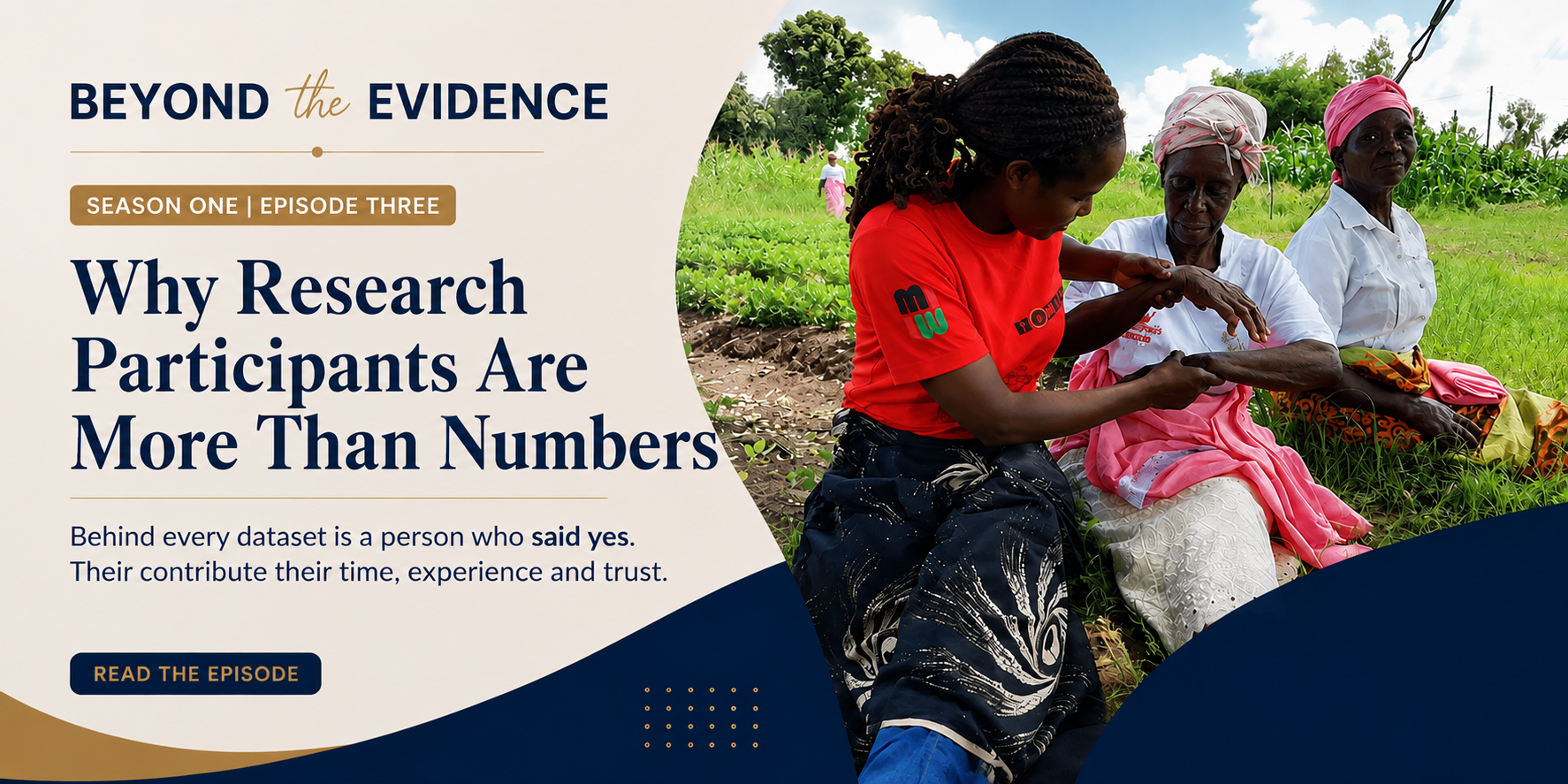
Why Research Participants Are More Than Numbers
There is a saying that when you are in Rome, you do what the Romans do.
For me, working in science communication meant something similar. I knew scientists conducted research. As a journalist, I had interviewed them many times. But knowing that research happens and understanding how it happens are two very different things. To communicate science well, I first had to understand the world of those who produce it. And sometimes, the lessons didn't come from scientists.
A few months into my science communication journey, I was walking through the corridors of the hospital where the research institution I worked for was based. I was on my way out for lunch when I bumped into someone I knew, who was battling cancer. We talked briefly, and she told me that her cancer had been diagnosed late and that she was receiving palliative care. She was also participating in a clinical research study, which meant returning to the hospital regularly for follow-up visits. Sometimes, she explained, she received nutritional supplements. Then she said something in Tumbuka, "Akulu, umoyo wamala kale, tikwendera waka chakulya." Simply translated: My life is already gone. I only come here for the food. To her, that was how she understood her participation.
The encounter left me with questions. Why would doctors and scientists trouble a patient who was already struggling with their research? For what? Just to add another study to their publication list?
A few days later, I spoke to an oncologist. I wanted to understand why someone with advanced cancer, already receiving palliative care, would still take part in research. His explanation changed my perspective. Research involving someone with advanced disease is not necessarily about finding a cure for that individual. It can help researchers understand symptom management, quality of life and comfort-care interventions. Some patients also choose to share their experiences to advance knowledge that could improve future care.
Suddenly, I saw the person behind the research in a different light. They are not simply "study participants." They are people living with pain, carrying their own understanding of why they are there, while also contributing to knowledge that might help someone else in the future.
That encounter deepened something in me.
As a journalist, I had interviewed patients, pregnant women and community members many times. You found someone with a story, asked your questions, recorded the interview, and before long, their voice or face could be on the radio or television. Working in clinical research changed how I approached that process. I became more intentional about consent, not simply because it was required, but because I began to understand what it represented. I also ensured that the journalists we trained in health research reporting through the Journalists in Residence initiative understood this. Science communication requires patience, which can be difficult in journalism, where deadlines are tight, and there is often pressure to chase the headline and publish the story.
While newsroom pressures favour speed, ethical science communication sometimes requires patience. There will be moments when you have a compelling story to tell, but the participant is not ready or simply does not want to give consent. No matter how good the story may be, their right to say no comes first. The story belongs to them before it belongs to you. They carry the experience. They carry the pain. And while sharing that experience could bring knowledge or hope to others, the decision to share it remains theirs.
So, it is important to understand that a signature on a consent form matters. But participation goes beyond a signature. People ask questions. They weigh risks. They speak to their families. They bring their beliefs, fears, expectations and previous experiences with them. Ultimately, they decide.
I came to understand this more deeply when I was challenged to document work involving a Controlled Human Infection Model (CHIM). This was new territory not only for me but also for Malawi. In a CHIM study, healthy volunteers may be intentionally exposed to an infectious organism under carefully controlled research conditions. I remember wondering: How do you even begin asking a healthy person to volunteer for something like this?
Before I could document and communicate the research to anyone else, I needed to understand it myself. So I planned several meetings with the scientists and followed the processes and procedures they were using from the beginning. Through that process and consultations, I learned that you don't begin with recruitment. You begin with engagement. This is where the three Cs framework came into play. Consultation (creating space to listen to concerns, gather perspectives and understand fears before decisions are made), Collaboration (working with communities and local structures rather than simply arriving with a finished research plan and asking people to accept it) and Co-creation (creating opportunities for communities and stakeholders to help shape how research and communication are designed and implemented).
For me, documenting that journey from consultation through recruitment and participation revealed what scientific papers and statistics alone could never show.
Participants were asking questions.
They wanted to understand what would happen to them.
They wanted to understand the risks.
They wanted to know why the research mattered.
And some still chose to participate, recognising that their contribution could help advance knowledge of disease and of future prevention or treatment.
That was when the language of research began to sound different to me. Sample size - Recruitment target - Dataset - Study population.
Necessary scientific terms, certainly. But behind each of them is a human being. Someone gave their time, answered deeply personal questions, allowed blood to be drawn, brought their child to a study clinic, agreed to return for another appointment, and trusted a research team enough to say yes. Sometimes, someone said no.
That matters too.
Research participants are more than numbers needed to make findings credible. They are people with agency, questions and rights, and partners in creating scientific knowledge. Yet somewhere between participation and publication, the people behind the research can disappear into the data.
My years in science communication taught me to look beyond the numbers. Participants contribute not only data but also their time, experiences, and, perhaps most importantly, their trust.
That trust deserves the same value as the evidence it helps create.
That, too, is science communication.